Government commits $32 million to turn forestry waste into Australian-made jet fuel
The federal government has announced a $32 million investment to help support a plan to convert forestry waste into Australian-made jet fuel.
39 articles collected
A 3 GW pumped hydro plan for Yallourn's coal mine clashes with a 2 GW gas-fired data centre proposal, framing a national debate on the future of large-scale energy infrastructure.
The federal government has announced a $32 million investment to help support a plan to convert forestry waste into Australian-made jet fuel.
The Yallourn coal mine in Victoria is identified as a potential site for a 3GW pumped hydro facility capable of providing 150GWh of deep storage for 50 hours. This brownfield project would utilize existing transmission infrastructure following the power station's scheduled 2028 closure, offering a long-term alternative to EnergyAustralia's planned $700 million battery.
State-owned utility seeks expressions of interest for project and contract management partners on its massive Clean Energy Link program, that will connect more solar and wind to the grid.
The Australian Renewable Energy Agency has pledged $32 million in conditional funding to HAMR Energy for a project converting forestry residues into sustainable aviation fuel. This initiative aims to establish a domestic clean fuel sector and reduce emissions by processing byproducts like sawdust and bark.
The Northern Territory government has allocated land for Beetaloo Energy’s proposed $40 billion hyperscale data centre, which intends to utilize 200 TJ of fracked gas daily to generate 2 GW of power. The ASX-listed miner’s project aims to support large-scale AI operations through significant gas-fired generation in the Beetaloo Basin.
Goldwind has commenced construction on a new Australian wind farm, marking a strategic shift by utilizing Envision Energy turbines. This transition to a different Chinese manufacturer signals a potential diversification of the domestic supply chain for large-scale wind infrastructure.
The remote Western Australian gold mining town of Laverton is transitioning to an off-grid power system expected to derive 80% of its energy from solar and battery storage. This shift aims to lower the costs of heavily subsidised electricity while reducing carbon emissions for the isolated community.
Samsung C&T Renewable Energy Australia has submitted the 1GWh Boro solar-plus-storage project in New South Wales to Australia's EPBC Act.
The federal government has awarded grants to 14 projects designed to integrate more renewable energy, utilise electric vehicles for grid support, and resolve network bottlenecks. These initiatives aim to optimise existing infrastructure and improve grid efficiency through technological innovation.
Contracts awarded for concrete foundations and other early works for ten huge spinning machines required to provide critical grid services.
Lynas Rare Earths reached a 90% renewable energy share at its Mt Weld operations during the June quarter, exceeding initial projections. The Gina Rinehart-backed miner is now considering disconnecting its processing facility from the local grid to operate independently.
All 1,038 Wärtsilä Quantum battery units have been delivered and installed at the 1.4GWh Wooreen BESS in Victoria, Australia.
After dominating sales in the first year of the federal Cheaper Home Batteries rebate, China battery upstart takes aim at new NSW subsidy with a new scalable C&I model.
Energy Consumers Australia's Ashley Bradshaw on the results of the latest consumer Report Card, and why consumers increasingly want less, rather than more, involvement with the energy system.
Taiwanese firms Sino-American Silicon and United Renewable Energy intend to establish a 1 GW TOPCon solar module manufacturing facility in the United States. The project involves a projected investment of approximately $40 million (TWD 1.5 billion).
The IEA-PVPS 2026 Life Cycle Inventory report updates solar manufacturing benchmarks using data from 83 factories, documenting improved silicon recycling and wafer efficiency. These findings provide new global standards for assessing the environmental footprint, energy consumption, and end-of-life processing of photovoltaic technologies.
Think tank Ember reports that European hydropower facilities could integrate 25 GW of additional solar and wind capacity by utilizing existing grid connections. This potential expansion across EU member states aims to leverage underused infrastructure to accelerate renewable deployment without requiring immediate network reinforcements.
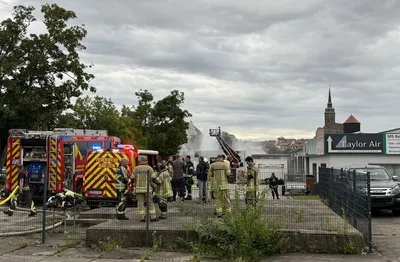
Emergency services evacuated residents in eastern Germany after a fire ignited within a 1.5 MW lithium-ion battery facility housed in four containers. Firefighters remain on-site to cool the storage units and prevent further escalation.
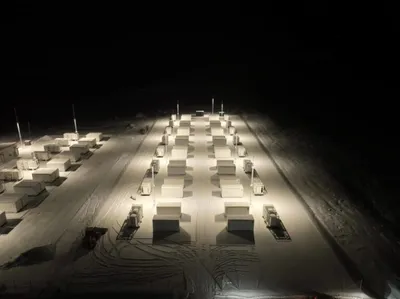
Delta Capacity has commissioned the Nordic region's largest battery energy storage system to date and acquired a subsequent project nearly double that capacity. Simultaneously, Ignitis Group reached a final investment decision on a new storage facility in Latvia.
An EDF research project found that elevated solar structures offer better crop protection against heat and frost compared to vertical arrays, which primarily serve as windbreaks. The findings suggest developers must carefully weigh specific agricultural resilience benefits against power generation goals when designing agrivoltaic systems.
Activity in Italy's grid-scale market is accelerating, with Sonnedix and the Strioga Family Foundation acquiring projects totalling over 1GWh combined, while BNZ and RWE have ordered BESS from Sungrow and LONGi respectively totalling 540MWh.
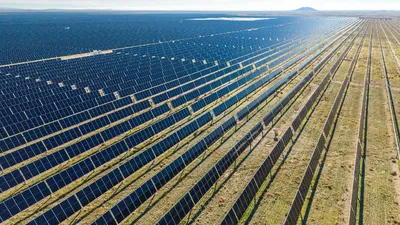
rPlus Energies has announced two new renewable energy developments in Idaho, United States, aimed at increasing the region's solar generation and battery storage capacity.
Iberdrola has reached an agreement to purchase a majority interest in Finnish electricity distribution firm Caruna, valuing the enterprise at roughly €5 billion ($5.7 billion) inclusive of debt.
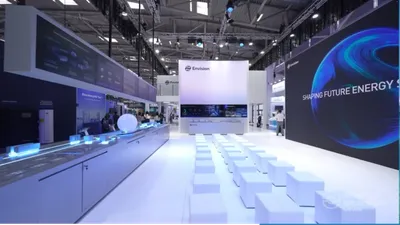
Envision Energy is showcasing integrated solutions that combine solar power, battery storage, and grid-forming technology managed by artificial intelligence to enhance network stability. Solutions Director Michael Koller presented these technical advancements at the Smarter E Europe event in Munich, highlighting the firm's focus on hybrid renewable systems.
Sinexcel is expanding its European presence by deploying grid-forming power conversion systems for utility-scale battery storage, focusing on technical challenges such as noise mitigation and operational maintenance. The manufacturer aims to address evolving grid stability requirements through specialized engineering for large-scale energy storage projects.
The Maine, US Department of Energy Resources (DOER) announced plans for the state's first competitive energy storage solicitation up to 360MW.
At ees Europe 2026 in Munich, Topband presented Ecosolex, its dedicated brand for battery energy storage and smart energy management, together with C&I and residential energy storage solutions.
The manufacturing line, supplied and installed by Italy’s Ecoprogetti, has an annual capacity around 200 MW and will produce modules for use in the Iraqi market.
BC Hydro and the British Columbia government are progressing the province's first large-scale battery energy storage system. This inaugural major utility project marks a significant shift in the Canadian province's approach to integrating storage technology into its power grid.
Eindhoven University of Technology students have engineered a solar-powered ambulance featuring a 50 kWh battery and 542 solar cells. The vehicle is designed for remote healthcare delivery with a reported 715 km range on paved roads while simultaneously sustaining internal medical systems.
With the Energy Storage Awards 2026 entry deadline less than two months away, we speak to four judges to hear what they are looking for from successful entrants.
BESS deployments in Europe are growing exponentially year-on-year, but is asset management, operations & maintenance (O&M) and data given enough priority? A data executive from BayWa r.e. discussed the topic.
Greece has run a public consultation on reforms to rules governing installations for self-consumption that would permit balcony solar up to 800 W.
Researchers in Indonesia developed a nano-enhanced phase-change material cooling approach for PV-powered electric bicycle charging stations, combining meta-analysis, experimental testing, and artificial neural network forecasting.
Trinasolar and Al-Raebi have signed an MoU to explore a 1.5 GW solar project pipeline in Yemen, including possible use of TOPCon 3.0 modules.
AMPYR Distributed Energy (ADE) has secured €170m ($194m) in debt financing from Crédit Agricole CIB and Franklin Templeton’s BSP.
Under pressure to do more with less, operators are looking to AI to optimize operations across increasingly complex and remote environments.
Delectrik Systems has been selected to deploy a 100MWh vanadium redox flow battery at Khavda Solar Park in the Indian state of Gujarat.
Research suggests that a strong predictor of a household going solar is engagement among the family.