Data centres stand firm on demand flex and secrecy
The Energy Co AU Policy ·
AirTrunk has partnered with European Energy to develop 600MW of renewables, including 260MW of solar and 350MW of wind, to power its Kurri Kurri data centre.
VOLTPULSE collects Australian energy news from 12 publishers, including ABC News, The Guardian, ARENA News and WattClarity, and tracks announcements from AEMO, the AER, the AEMC and 13 network businesses, alongside daily NEM prices, market notices and tender data.
The NEM weekly average fell 15.6 per cent against the prior week to $63.1/MWh. The AER denied requests from Ergon Energy and Energex to remove optional demand and flexible load tariffs. Eku Energy fully commissioned its 200 MW Williamsdale battery in the Australian Capital Territory.
The NEM average price hit $111.20/MWh, sitting 66 per cent above the seven-day average. The Clean Energy Regulator permanently suspended 1 Solar Australia from the Small-scale Renewable Energy Scheme. EnergyAustralia paid $750,000 in penalties over alleged frequency service failures at four batteries.
AirTrunk has partnered with European Energy to develop 600MW of renewables, including 260MW of solar and 350MW of wind, to power its Kurri Kurri data centre.

Electricity consumers will benefit from new, stronger rules to govern the increasing number of large data centres connecting to Australia’s main grid. The nation’s energy rule maker, the Australian Energy […]
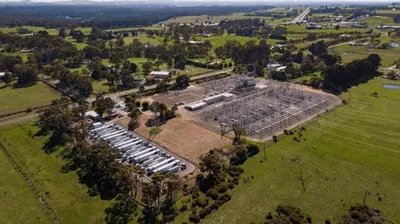
EnergyAustralia has paid AU$750,000 (US$519,300) in penalties after the Australian Energy Regulator (AER) alleged that four battery energy storage systems (BESS) it manages failed to deliver frequency services offered into the market.
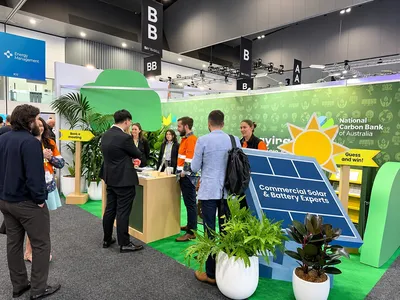
The Small-scale Renewable Energy Scheme has expanded to allow solar installations up to 1 MW to generate Small-scale Technology Certificates (STCs). This regulatory shift increases financial incentives for commercial and industrial solar projects by raising the previous capacity threshold for upfront certificate creation.
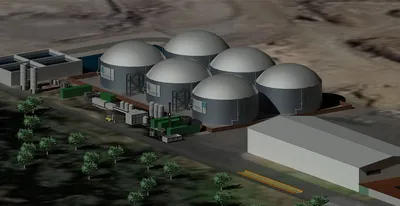
Delorean has reached financial close on its wholly owned NSW1 Horsley Park Bioenergy Plant in Horsley Park, New South Wales. The NSW1 Horsley Park Bioenergy Plant will be Australia’s first […]
Octopus Energy has launched an Asia fund whose first investment backs a Manila developer targeting 450 MW of solar and 350 MWh of battery storage by 2030.
Sweden plans to launch a voluntary database for solar inverters, battery storage systems and bidirectional EV charging equipment in 2027, replacing its existing pre-assessment system for new listings.
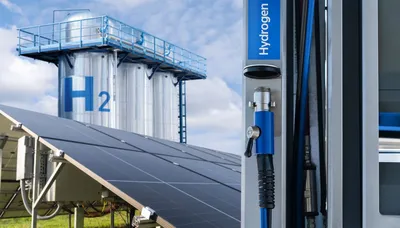
The hydrogen sector is narrowing its scope to specific, policy-supported initiatives centered on gas blending, energy storage, and industrial applications. These targeted projects are increasingly designed to enhance grid stability and manage load balancing within the power system.
Kazakhstan's government is proposing a new power purchase agreement framework allowing renewable generators to transition to a state-backed single buyer after three years of bilateral contracting. The policy aims to mitigate offtake risks and enhance investor certainty, alongside planned auctions for energy storage capacity.
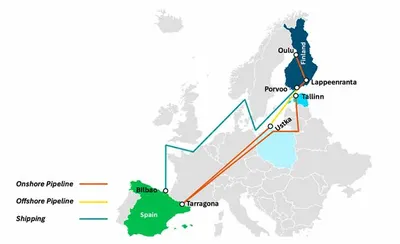
New modeling indicates that transporting CO2 or biomass to high-insolation regions for e-fuel synthesis is more cost-effective than transmitting renewable electricity to carbon sources. The research suggests that shipping carbon to sunny locations optimizes synthetic fuel production costs compared to localized hydrogen generation.
AER publishes exemptions guidelines review final decision
AER
Enterprise agreement update
AEMO
Implementation of the ECGS PASA, ERSAA and SoLR rule changes
AEMO
Increases to Wasted Connection and Late Cancellation Fees from 1 January 2027
SA Power Networks
Endeavour Energy publishes 2026 safety performance and bushfire preparedness report
Endeavour Energy
Data centres stand firm on demand flex and secrecy
Several prices spikes in TAS (ENERGY and Reg FCAS) on Wednesday 11th November 2026
Fortescue’s 250MWh battery withstands 95MW power station outage
Price spikes in South Australia on Monday 9th November 2026
Coal and gas export demand could dry up before 2040. Australia needs a plan for what comes next